Behind the ETF 00927 Hype: Using Bazi 'Pian Cai' and 'Zheng Cai' to Understand Investment Risk and Allocation
Taiwan's ETF 00927 recently broke 2,000+ in search popularity, becoming a hot topic in investment circles. This article does not predict ups and downs but draws on the ancient wisdom of Bazi Pian Cai (Indirect Wealth) and **Zheng Cai (Direct Weal
Introduction
Taiwan's ETF 00927 recently broke 2,000+ in search popularity, becoming a hot topic in investment circles.
This article does not predict ups and downs but draws on the ancient wisdom of Bazi Pian Cai (Indirect Wealth) and Zheng Cai (Direct Wealth) to help modern people view risk and allocation rationally.
Basic Clarification
Common Misconceptions
Many people equate the wealth stars in Bazi directly with earning ability, but Pian Cai and Zheng Cai actually describe the flow pattern of wealth and one's risk orientation.
- Misconception 1: Pian Cai equals gambling or windfall gains. In reality, Pian Cai represents non-fixed, flowing, opportunity-based income, not mindless speculation.
- Misconception 2: Zheng Cai equals conservative hoarding. Zheng Cai emphasizes stability and predictability, but can also achieve growth through long-term compounding.
- Misconception 3: Bazi can directly pick stocks. Metaphysics only provides risk appetite and behavioral reminders; it cannot replace fundamental analysis.
- Misconception 4: More wealth stars means richer. Excessive wealth stars without restraint can lead to disaster caused by wealth, manifesting in investing as overconfidence.
- Misconception 5: People with strong Pian Cai are definitely suited for stock trading. Strong Pian Cai only means higher tolerance for volatility, not professional investment skills.
Boundaries Between Metaphysics and Modern Investing
Bazi is an ancient symbolic system for observing human nature and fortune; it is not a financial prediction model.
Modern investing requires hard data such as financial reports, valuations, and liquidity; metaphysics can only assist in understanding one's own behavioral biases.
- What can be borrowed: Those with strong Pian Cai may suit flexible strategies; those with strong Zheng Cai may suit disciplined regular investing.
- What cannot be relied upon: You cannot use Bazi to determine the future rise or fall of ETF 00927, nor can it replace stop-losses and position management.
- Boundary awareness: Metaphysics is a mirror, not a crystal ball; investment decisions still require rational analysis.
- Integration approach: Treat the risk appetite revealed in Bazi as a starting point for self-awareness, not as buy or sell signals.
Core Insights
Pian Cai: Risk Appetite and Opportunity Capture
In Bazi, Pian Cai often refers to wealth sources that are irregular, volatile, and require active seizure.
It corresponds to opportunity-type assets in investing, such as thematic ETFs, swing trading, and emerging sectors.
People with strong Pian Cai are usually sensitive to market hotspots and dare to enter at the early stages of a trend, but can easily chase prices at emotional peaks.
From the Ten Gods perspective, Pian Cai is often associated with social connections, information, and fluid resources, which in modern terms can map to news-driven and thematic speculation.
- Characteristics: High elasticity, fast feedback, tends to amplify emotions.
- Strength: If a trend is captured, short-term returns may be relatively high.
- Risk: Severe volatility; chasing highs can easily lead to being trapped, requiring strict stop-losses.
- ETF 00927 insight: High popularity often comes with high volatility; those with strong Pian Cai need to restrain impulses even more.
- Behavioral bias: Excessive trading, frequent portfolio checking, and leveraging are typical signs of Pian Cai losing control.
- Coping strategy: Set a maximum single-investment limit and write down exit conditions before entering.
- Psychological mechanism: Those with strong Pian Cai are often affected by overconfidence, overestimating their market-timing ability.
- Historical mirror: Ancient merchants with strong Pian Cai were often good at seizing business opportunities, but also frequently suffered huge losses from hoarding.
Zheng Cai: Stable Allocation and Long-Term Discipline
Zheng Cai in Bazi represents stable, predictable wealth accumulated through labor or systematic methods.
It corresponds to core assets in investing, such as broad-market ETFs, regular fixed-amount plans, and bond allocations.
People with strong Zheng Cai are usually more patient and can tolerate short-term fluctuations, making them better suited for long-term holding and compound growth.
From the Ten Gods perspective, Zheng Cai emphasizes planning, saving, and sustainability, highly aligning with the modern concept of asset allocation.
- Characteristics: Lower volatility, gradual returns, suitable for long-term holding.
- Strength: Reduces timing risk through the power of compounding over time, leading to a more stable mindset.
- Risk: Excessive conservatism may underperform inflation; requires appropriate pairing with growth assets.
- Allocation mindset: Regardless of how strong Pian Cai is, always keep a Zheng Cai base position as ballast.
- Discipline manifestation: Regular fixed-amount investing, asset rebalancing, and not changing plans due to short-term news.
- Real-world mapping: Broad-market index funds, high-rated bonds, and money market funds all belong to Zheng Cai-type tools.
- Psychological mechanism: Those with strong Zheng Cai focus more on margin of safety, which helps avoid chasing rallies and selling panics.
- Long-term perspective: Zheng Cai assets may seem dull in the short term, but over a decade they often outperform most frequent traders.
Combining Pian Cai and Zheng Cai: Asset Allocation from a Bazi Perspective
In a Bazi chart, Pian Cai and Zheng Cai are not opposites but complements.
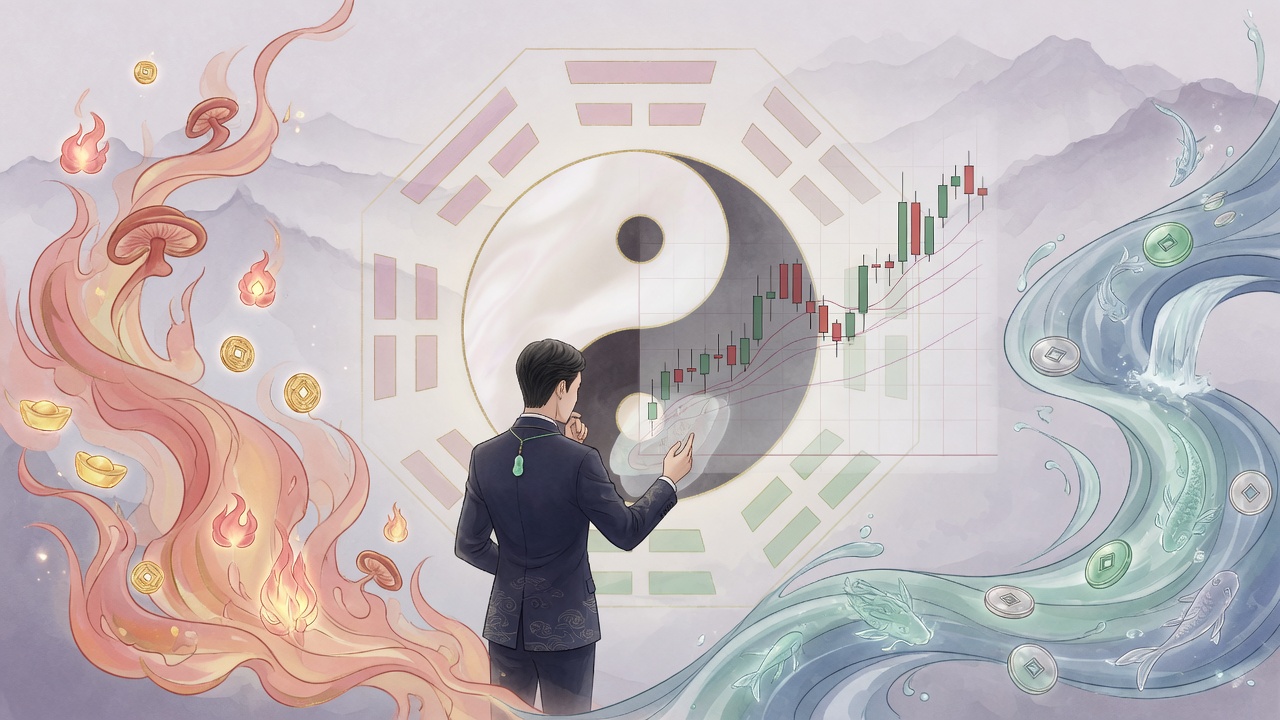
Modern portfolio theory emphasizes risk diversification, which coincides with the idea of yin-yang balance in metaphysics.
Thematic products like ETF 00927 often carry strong Pian Cai attributes and are better suited as satellite positions rather than one's entire net worth.
A healthy investment portfolio needs both the stability of Zheng Cai and the flexibility of Pian Cai, with proportions adjusted according to age and risk tolerance.
- Core + Satellite: Zheng Cai forms the foundation, Pian Cai provides flexibility; the ratio varies by individual.
- For strong Pian Cai: Can appropriately participate in thematic ETFs, but must set per-trade limits and stop-loss lines.
- For strong Zheng Cai: Can gradually increase indexed allocations, trading time for space.
- Annual luck reminder: If Pian Cai is excessively strong in a given year, reduce leverage instead to avoid overconfidence.
- Rebalancing principle: After taking profits from Pian Cai positions, transfer a portion into the Zheng Cai base to lock in gains.
- Risk budgeting: Treat Pian Cai investments as risk capital that may be entirely lost, without affecting quality of life.
- Age factor: The proportion of Pian Cai can be slightly higher when young, but should gradually shift toward Zheng Cai after middle age.
- Generalized case: Those with strong Pian Cai who chase into an ETF at the peak of hype often get trapped short-term; those with strong Zheng Cai who invest with discipline smooth out their cost basis.
Pitfall Avoidance Guide
Precautions
- Do not treat metaphysics as a prediction tool: Bazi can only hint at personality tendencies and risk appetite, not predict ETF ups and downs.
- Beware of hype traps: When search volume for ETF 00927 surges, sentiment is often already high, increasing the risk of chasing.
- Control Pian Cai positions: Pian Cai-type investments should generally not exceed 20%–30% of investable assets, adjusted by individual.
- Establish a Zheng Cai base first: Keep at least 3–6 months of living expenses in highly liquid assets before considering thematic ETFs.
- Avoid frequent trading: The Pian Cai mindset easily leads to short-term in-and-out moves; fees and slippage will erode returns.
- Regular rebalancing: When the ratio between Pian Cai and Zheng Cai deviates from the target, sell overheated assets and add to underweight ones.
- Do not use leverage: Those with strong Pian Cai should especially avoid borrowing to invest; when wealth stars are clashed in Bazi, conservatism is even more crucial.
- Do not blindly follow trending searches: High search volume does not mean it's suitable to buy; it may just be an emotional peak.
- Maintain sufficient margin of safety: Any investment should be entered when price is below intrinsic value, not when emotions are running high.
- Keep an investment journal: Record the reason and emotional state for each trade; review afterward whether it was driven by Pian Cai or Zheng Cai thinking.
Specific Reminders for ETF 00927 Followers
If you became interested in ETF 00927 because of trending searches, first ask yourself: Is this a Pian Cai impulse or a Zheng Cai allocation?
A hot topic itself is not a reason to buy or sell; understanding your own risk tolerance and investment horizon is the real starting point.
- Check the underlying assets first: Understand the index and constituents that ETF 00927 tracks; don't place an order based solely on name or hype.
- Set a holding period: Pian Cai-type investments should have a clear exit plan; don't hold indefinitely.
- Diversify thematic concentration: A single thematic ETF should not take up an excessively high proportion of the portfolio to avoid sector-specific black swans.
- Emotion log: Write down the rationale and expectations before buying; review afterward whether the decision was driven by Pian Cai or Zheng Cai thinking.
- Use idle money: Pian Cai is highly volatile; only funds that would not affect your livelihood if lost entirely are suitable.
- Invest in batches: Don't bet all at once; use regular fixed-amount or phased buying on dips to reduce timing risk.
- Set a stop-loss line: Once a Pian Cai asset falls below the preset price, execute the discipline without wishful thinking.
- Regular review: Check the Pian Cai-to-Zheng Cai ratio quarterly to ensure the portfolio still aligns with your risk appetite.
Summary and Recap
The hype around ETF 00927 is a mirror of market sentiment; Bazi Pian Cai reminds us to manage risk, while Zheng Cai reminds us to uphold discipline.
Rational allocation, phased investing, and maintaining a sufficient margin of safety are the key takeaways that modern investors should carry with them.