Vietnam U17's Road to the World Cup: Character, Choice, and Timing Through Bazi Culture
In 2026, Vietnam's U17 national team is accelerating preparations for the highest stage of youth football. As the spotlight focuses on these teenagers, let's borrow the ancient Eastern Bazi culture to rationally explore the deep connection betwee
Opening Guide
According to recent reports, Vietnam's U17 national team is sprinting at full speed to prepare for the upcoming World Cup stage. These young players carry expectations and also face enormous growth pressure.
Beyond competitive results, we might as well use Bazi, a traditional time model, to see how it interprets the interaction of personality, choice, and timing—without making fortune assertions, just a rational humanistic popularization.
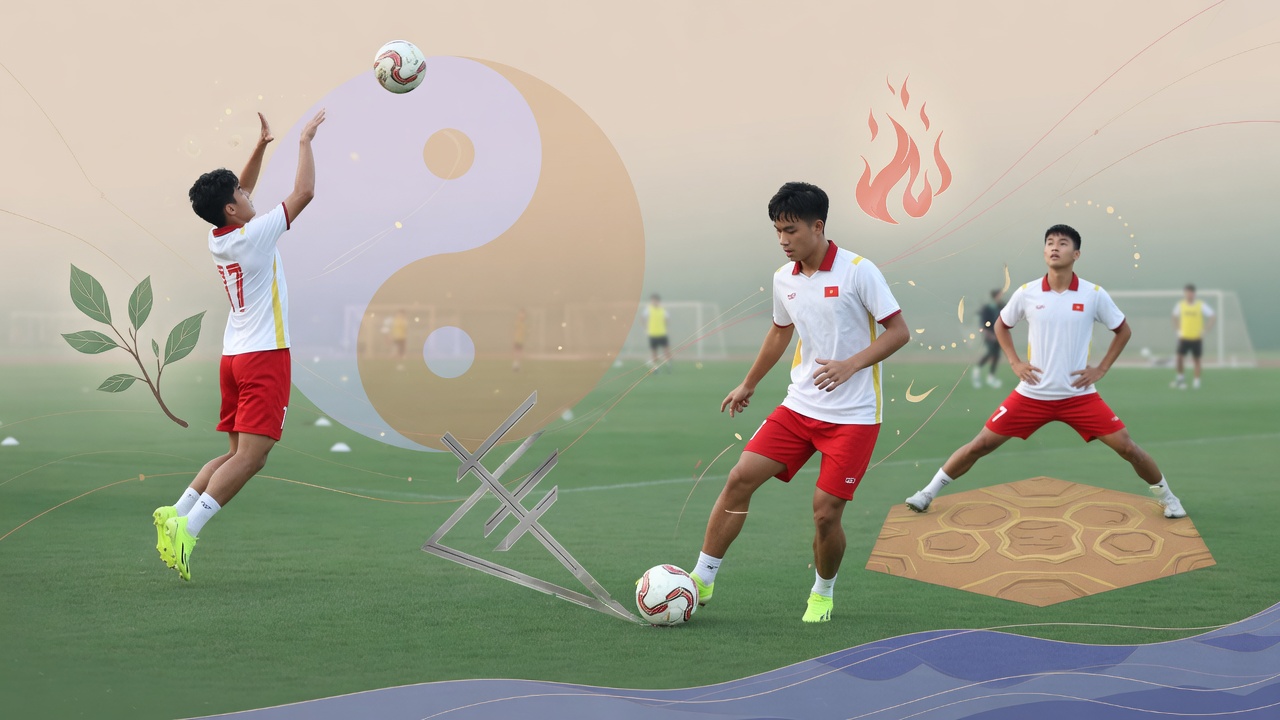
Basic Clarification: Bazi Is Not a Verdict of Fate
Common Misconceptions
Many people's first impression of Bazi is 'fortune telling', even equating it with superstition. This precisely ignores its essence as ancient temporal ecology.
- Misconception 1: Bazi can definitively judge life's success or failure. In reality, it is more like an innate energy map describing trend ranges, not specific events.
- Misconception 2: People born at the same year, month, day, and hour share the same fate. Bazi only provides basic parameters; acquired environment, personal choices, and era background are the real variables.
- Misconception 3: Bazi only applies to Chinese people. The underlying Yin-Yang and Five Elements logic is an abstract model from ancient observation of natural rhythms, with cross-cultural explanatory flexibility.
Core Points: How Bazi Understands Character, Choice, and Timing
1. Day Master and Character Foundation: Each Player Has a Unique 'Energy Core'
Day Master is the core reference point in Bazi, representing the person. It is determined by the heavenly stem of the birth day, divided into ten types such as Jia, Yi, Bing, Ding, each mapping to distinct personality archetypes.
This is not labeling people, but offering a self-awareness perspective. Just like on the football field, some are naturally inclined to charge forward, while others enjoy organizing and orchestrating.
- Jia Wood Day Master: Like a towering tree—upright, responsible, but possibly stubborn. Similar to a leader-type central defender in a team, willing to face challenges head-on.
- Bing Fire Day Master: Like the sun—passionate, infectious, but sometimes impatient. Like a passionate striker who can ignite the whole stadium.
- Geng Metal Day Master: Like a blade—resolute, decisive, strong execution, but prone to sharpness. Comparable to a technically skilled winger with outstanding one-on-one breakthrough ability.
- Ren Water Day Master: Like a river—flexible, adaptable, deep wisdom, but possibly undisciplined. Corresponds to a visionary midfield organizer skilled in distribution and switching play.
- Understanding these archetypes is not to solidify perceptions, but to help young players accept their innate nature and find the most suitable position to exert force within the team.
2. The Ten Gods Relationship Network: An Ancient Mirror of Team Collaboration
Ten Gods are ten relationship symbols generated by the Day Master interacting with other heavenly stems and earthly branches, such as Direct Officer, Seven Killings, Direct Resource, Eating God. They naturally form a complex interpersonal and capability network.
The operation of a football team is like a flowing Bazi chart. Coaches, teammates, opponents, tactical systems can all be mapped in the language of Ten Gods.
- Direct Officer: Represents rules, discipline, and responsibility. Corresponds to the coach's tactical requirements and referee's decisions, constraining players' behavioral boundaries.
- Seven Killings: Symbolizes pressure, competition, and breakthrough. Like opponent pressure in key matches, it can stimulate potential but may also cause technical breakdowns.
- Direct Resource: Governs learning, absorption, and benefactor support. Like mentoring from senior players and tactical video analysis, helping young players grow quickly.
- Eating God: Represents talent, creativity, and relaxation. It is the spur-of-the-moment improvisation in matches, those artistic moments beyond routine.
- Friend and Rob Wealth: Refer to peers, teammates, and competitors. Can be brotherhood fighting side by side, or positional pressure from healthy competition.
- A healthy team needs all Ten Gods in their proper places: discipline (Direct Officer), drive (Seven Killings), wisdom (Direct Resource), agility (Eating God), and well-managed peer relationships (Friend/Rob Wealth). Bazi thinking reminds us that collaboration is not about eliminating differences, but making differences complementary.
3. Luck Cycles, Annual Stars, and Timing: Assessing the Situation Matters More Than Effort
Luck Cycle is a ten-year fortune interval, and Annual Star is the energy field of the current year. Together they form the timing dimension in Bazi, answering the question of 'when to advance and when to hold back'.
For Vietnam U17 players, 2026 to 2027 is exactly the key window of major luck cycle transition in their lives. The World Cup stage is not only a competitive test, but also the intersection of personal destiny rhythm and era opportunity.
- Go with the flow: When the Luck Cycle enters a prosperous Wealth and Officer phase, it is suitable to actively compete for starting positions and showcase strength, because the external environment supports action.
- Conserve strength against the trend: If encountering an Annual Star with Friend/Rob Wealth contention or overly heavy Resource stars, one may face intensified competition or overthinking. At such times, it is better to focus on polishing fundamentals and turn bench time into observation and learning.
- Decision nodes: When the Annual Star forms combination, clash, or punishment with the Day Master, important choices often emerge. For example, whether to transfer, whether to change positions—these decisions need to be weighed against one's Bazi likes and dislikes.
- Bazi never advocates passive waiting. It emphasizes knowing the timing and then acting: know when the wind comes, then set sail with full force. Just as the coaching staff adjusts tactics based on opponents, players should adjust their effort based on their own rhythm.
- Times create heroes, and heroes also follow the times. These Vietnam U17 teenagers happen to be in a cycle of national youth football academy system upgrades and increasing international attention—this is their shared 'Luck Cycle' background. Seizing it requires clear self-awareness and decisive choices.
Pitfall Guide: Use Bazi to Reflect on Growth, Not to Frame Life
Precautions
When applying Bazi thinking to youth sports development, one must be wary of several common cognitive traps. The following reminders apply not only to players but also to parents, coaches, and fans.
- Do not turn personality analysis into stereotypes: Day Master describes tendencies, not verdicts. Jia Wood players can be refined, and Ren Water players can be resilient. Bazi is a starting point, not an ending.
- Do not use 'bad luck' to negate effort: When the Annual Star is unfavorable, it is exactly the golden period to strengthen weaknesses and internal skills. If you slack off because of a phrase like 'this year's fortune is poor', then you truly lose to your mindset.
- Do not ignore the reshaping power of acquired environment: Bazi accounts for only about one-third of life's weight. Scientific training, psychological counseling, nutritional support—these acquired factors can greatly rewrite the innate script.
- Do not publicly compare charts within the team: This can easily trigger fortune discrimination or self-fulfilling prophecy. Bazi is a private reflective tool, not locker room chatter.
- Do not equate Bazi with tactical decision-making basis: Lineup decisions should be based on real-time form, opponent analysis, and coaching experience, not metaphysical calculations. Bazi can only assist personal mindset adjustment, not replace professional judgment.
- Do not expect 'shortcuts to change luck': True luck change is changing thought patterns, behavioral habits, and environmental choices. Wearing a certain accessory or changing a number is far less practical than practicing free kicks an extra hour every day.
Summary and Review
The World Cup journey of Vietnam's U17 national team is a resonance of youth and timing. From the perspective of Bazi culture, each player carries a unique Day Master character, finds their place in a team woven by Ten Gods, and makes key choices through the rhythm of Luck Cycles and Annual Stars.
This ancient wisdom ultimately points not to fatalism, but to clear self-awareness and proactive timing grasp. May the young men know destiny but not resign to it, and play the freest football at the best age.